Dry needling vs acupuncture compares two needle-based therapies. Dry needling targets myofascial trigger points using Western anatomy, often by physical therapists for musculoskeletal pain relief. Acupuncture follows Traditional Chinese Medicine, placing needles along energy meridians to balance qi, with different theories, credentials, and conditions commonly treated.

Dry Needling vs Acupuncture at a Glance
| Feature | Dry Needling | Acupuncture |
|---|---|---|
| Origin | Western medicine / neurophysiology | Traditional Chinese Medicine (TCM) |
| Theoretical basis | Anatomy, trigger points, neuroscience | Qi flow along meridians |
| Needle placement | Directly into myofascial trigger points | Along TCM meridian pathways |
| Practitioner | Physical therapist, chiropractor | Licensed acupuncturist |
| Typical conditions | Muscle pain, sports injuries, neck/back pain | Pain, stress, insomnia, digestive issues |
| Needle technique | Pistoning (in-and-out movement) | Retention (needles left in place) |
| Licensing | Varies by state scope-of-practice law | Standardized national licensing via NCCAOM |
What Is Dry Needling?
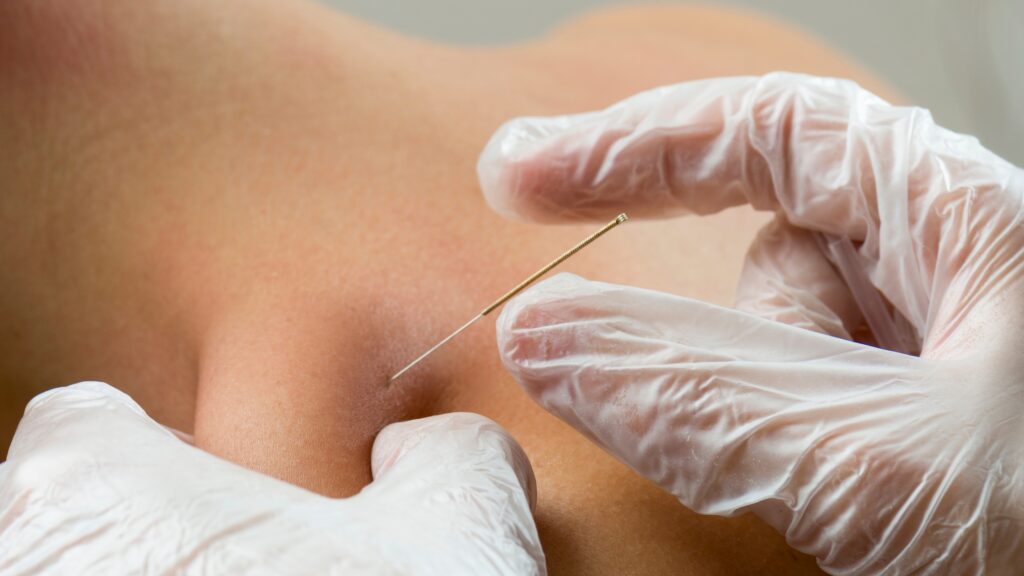
Dry needling is a modern, evidence-based technique that uses thin filiform needles to penetrate myofascial trigger points — tight, irritable knots within a taut band of muscle tissue. The term “dry” means practitioners do not inject any substance; instead, the needle itself produces the therapeutic effect. The mechanism is neurophysiological: inserting a needle into a trigger point disrupts the abnormal electrical activity in that muscle fiber, reducing pain and restoring normal function.
A licensed physical therapist or chiropractor typically performs dry needling as part of a broader rehabilitation plan. Sessions usually last 15–30 minutes. When the needle contacts the trigger point, you may feel a brief muscle twitch or aching sensation, which signals that the practitioner targeted the correct tissue.
Dry needling operates entirely within Western anatomical and neurophysiological principles, with no connection to energy theory or spiritual frameworks. Physical therapists most commonly combine dry needling with manual therapy and exercise to treat acute or chronic musculoskeletal pain.
What Is Acupuncture?
Acupuncture is a core practice of Traditional Chinese Medicine (TCM) with a history spanning more than 2,500 years. It is based on the concept that vital energy — called qi (chi) — flows through the body along 14 primary pathways known as meridians. When that flow is blocked or imbalanced, pain and illness follow. Inserting needles at specific points along these meridians is believed to restore balance and promote healing.
A licensed acupuncturist completes a graduate-level program and must pass national board exams administered by the NCCAOM (National Certification Commission for Acupuncture and Oriental Medicine). This credential is the gold standard for acupuncture practice in the United States. To learn more about how acupuncture works, including point selection and session structure, see our dedicated guide.
Unlike dry needling, acupuncture addresses a broader range of conditions — not just musculoskeletal pain. Practitioners use it to treat stress, anxiety, insomnia, hormonal imbalances, and digestive conditions. Sessions typically last 45–60 minutes, and needles are retained in place for 20–30 minutes rather than manipulated actively.
How the Needle Techniques Actually Differ
In dry needling vs acupuncture, both treatments use the type of thin, filiform needles, so needle gauge is comparable. The techniques, diverge in depth, angle, and movement.
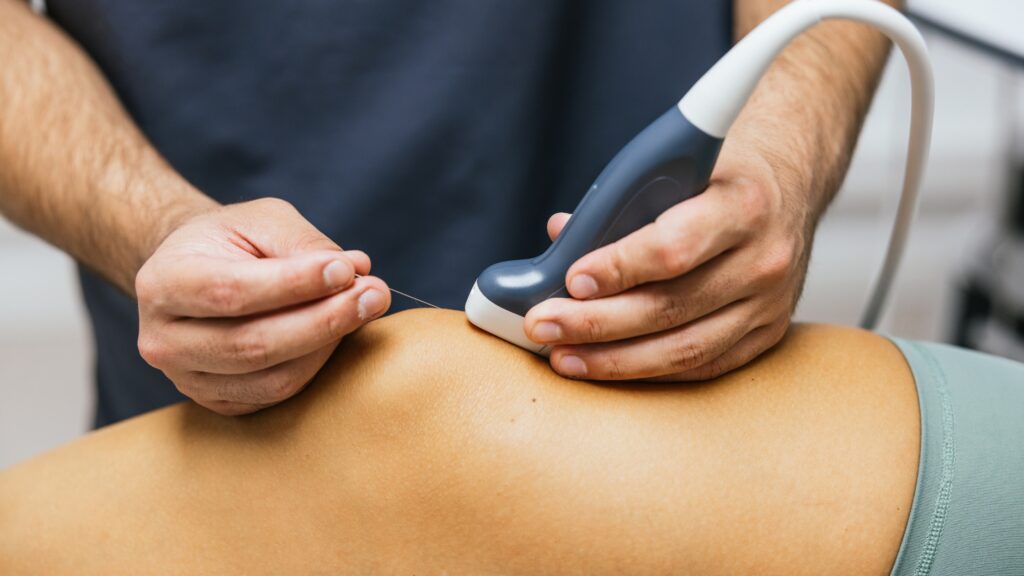
Dry needling typically targets deeper muscle tissue, inserting the needle into a trigger point within a taut band. The practitioner uses a pistoning motion, repeatedly advancing and withdrawing the needle, to elicit a twitch response. Acupuncture needles are often inserted at shallower depths and left in place without manipulation.
Which hurts more? In dry needling vs acupuncture, dry needling tends to produce a sensation, including a muscle cramp or twitch, because it deliberately provokes the trigger point. Acupuncture is described as producing mild pressure or a dull ache at the insertion site. Post-treatment soreness lasting 24–48 hours is more common after dry needling than after acupuncture.
Neither treatment should cause sharp, lasting pain. If it does, tell your practitioner immediately.
Which Conditions Does Each Treat Best?
Choosing between the two treatments often comes down to what you are trying to fix. Dry needling is purpose-built for musculoskeletal problems — think tight muscles, sports injuries, and referred pain patterns. Acupuncture casts a wider net, addressing both physical and systemic conditions.
For sciatica: Dry needling can directly release the piriformis and gluteal trigger points that compress the sciatic nerve, making it a strong first-line option for sciatica treatment with a mechanical cause. Acupuncture also shows evidence for sciatica relief, particularly for chronic cases where systemic inflammation or stress contributes to symptoms. Neither is universally superior — your specific presentation matters most.
Dry Needling for Musculoskeletal Pain
Clinical research supports dry needling for reducing pain intensity and improving range of motion in neck pain, lower back pain, shoulder impingement, and plantar fasciitis. A 2021 systematic review published in the Journal of Orthopaedic & Sports Physical Therapy found significant short-term pain reduction for trigger point dry needling in neck and upper back conditions. Results from a single session can last several days; a full course of 4–6 sessions often produces improvements lasting weeks to months. Combining dry needling with trigger point therapy and corrective exercise extends those results further.
Acupuncture for Pain and Systemic Conditions
The National Institutes of Health (NIH) and the World Health Organization (WHO) both recognize acupuncture as an effective treatment for dozens of conditions, including chronic low back pain, osteoarthritis, migraines, and chemotherapy-induced nausea. A landmark 2012 meta-analysis in the Archives of Internal Medicine, covering nearly 18,000 patients, found acupuncture significantly outperformed both sham acupuncture and no treatment for chronic pain. For patients managing chronic pain treatment options alongside stress, anxiety, or sleep disorders, acupuncture’s broader systemic reach offers a distinct advantage.
Who Should Not Get Dry Needling or Acupuncture?
Do not get dry needling if you:
- Take blood thinners (anticoagulants) without medical clearance
- Have a needle phobia or vasovagal syncope history
- Are pregnant (certain trigger point locations carry risk)
- Have a local skin infection, open wound, or active tumor at the target site
- Have a compromised immune system without physician approval
Do not get acupuncture if you:
- Have a pacemaker (some practitioners use electrical stimulation with needles)
- Are in the first trimester of pregnancy without licensed supervision
- Have a bleeding disorder or are on anticoagulant therapy
- Have active skin infections at proposed needle sites
Both treatments require full disclosure of medications and medical history before your first session. Always consult your primary care provider before starting either therapy.
Credentials, Licensing, and State Regulations
Acupuncture licensing in the United States is standardized. Practitioners must earn a master’s or doctoral degree from an accredited program and pass NCCAOM board exams. All 50 states license acupuncturists, and the credential is consistent nationwide.
Dry needling operates in a legal gray zone. Physical therapists perform it under their scope of practice in most states, but that scope is not uniform. As of 2025, a small number of states — including California — have historically restricted or prohibited physical therapists from performing dry needling, which is why you may have encountered the claim that “dry needling is illegal.” It is not illegal everywhere; it is regulated differently by each state’s physical therapy practice act. Before booking a session, verify that your state permits your specific provider type to perform dry needling.
Chiropractors and other practitioners face similar state-by-state variation. Always confirm your provider’s credentials and state authorization before treatment.
Cost and Insurance Coverage Compared
Dry needling typically costs $75–$150 per session when billed as a standalone service. When physical therapists include dry needling during a therapy visit, they may bundle it into the overall PT cost, which insurance often covers under musculoskeletal benefits. Check whether your plan covers “neuromuscular reeducation” or “therapeutic procedures,” because providers frequently bill dry needling under those codes.
Acupuncture sessions generally range from $75–$175, with initial consultations sometimes reaching $200. Insurance coverage has expanded significantly since the Affordable Care Act, and many major insurers now cover acupuncture for chronic low back pain specifically. Medicare began covering acupuncture for chronic low back pain in 2020, covering up to 12 sessions per year.
Neither treatment is universally covered. Call your insurer before your first appointment and ask specifically about coverage codes.
How to Choose Between Dry Needling and Acupuncture
Use this decision framework to guide your choice:
- Choose dry needling if your problem is primarily musculoskeletal, acute, and localized — muscle knots, sports injuries, post-surgical tightness, or mechanical neck and back pain. Work with a licensed physical therapist who integrates dry needling into a full rehab plan.
- Choose acupuncture if your condition is chronic, systemic, or multifactorial — including stress-related pain, insomnia, digestive issues, or pain that has not responded to Western interventions alone. A licensed acupuncturist credentialed through NCCAOM is your benchmark for quality care.
- Consider both if you have chronic musculoskeletal pain complicated by stress, anxiety, or poor sleep. Many patients use dry needling for immediate trigger point relief and acupuncture for longer-term systemic support.
Neither treatment replaces a diagnosis from a qualified healthcare provider. Start with your physician, physical therapist, or specialist to confirm the source of your pain before choosing a needle-based therapy.
FAQs
1. Which one is better, dry needling or acupuncture?
Neither is universally better. Dry needling is more effective for acute musculoskeletal pain and specific trigger points. Acupuncture is better suited for chronic, systemic, or stress-related conditions. Your diagnosis and goals should drive the choice.
2. How long do dry needling results last?
Results from a single dry needling session typically last a few days to one week. A course of 4–6 sessions, combined with exercise and manual therapy, can produce improvements lasting several weeks to months.
3. Who should not get dry needling?
People taking blood thinners, those with needle phobias, pregnant individuals (at certain sites), people with active local infections, and immunocompromised patients should avoid dry needling or seek medical clearance first.
4. Does acupuncture go deeper than dry needling?
No. Dry needling typically penetrates deeper into muscle tissue to reach trigger points within taut bands. Acupuncture needles are often inserted at shallower depths and retained without active manipulation.
5. Is dry needling or acupuncture better for sciatica?
Dry needling is often preferred for mechanically-caused sciatica because it directly releases the piriformis and gluteal trigger points compressing the sciatic nerve. Acupuncture may be more effective for chronic or stress-related sciatica. Consult a provider for a proper diagnosis first.
6. Why is dry needling illegal in some states?
Dry needling is not illegal everywhere, but it is restricted in some states because physical therapists’ scope-of-practice laws do not uniformly permit the technique. California has been the most notable example. Regulations vary by state and provider type.
7. Do dry needling and acupuncture use the same size needles?
Yes. Both treatments use thin, solid filiform needles of comparable gauge. The needles do not inject any substance. The primary difference is how and where the needles are placed, not the needle itself.
8. Which treatment hurts more — dry needling or acupuncture?
Dry needling typically causes a stronger immediate sensation, including a muscle twitch or cramp, and more post-session soreness lasting 24–48 hours. Acupuncture usually produces mild pressure or a dull ache with minimal soreness afterward.