Physical Rehabilitation plays a critical role in helping individuals regain mobility, reduce pain, and return to daily life with confidence in Maryland. Many patients struggle with lingering discomfort, limited movement, or uncertainty after injury or surgery. However, structured rehabilitation provides a clear, guided path toward recovery rather than guesswork or temporary relief.
Swift Rehabilitation delivers personalized rehabilitation services across Maryland, focusing on functional recovery, safety, and long-term independence. Through evidence-based therapy and patient-centered care, rehabilitation becomes a practical solution for people who want real improvement—not short-term fixes.

Understanding Physical Rehabilitation
Physical rehabilitation focuses on restoring how the body moves, functions, and handles everyday demands—so patients can return to daily life with better control, strength, and comfort. Instead of masking symptoms, rehabilitation targets root causes such as mobility restrictions, muscle imbalance, poor movement patterns, and instability. Consequently, the results support real activities like walking, working, lifting, and climbing stairs—not just isolated clinical improvements.
In Maryland, physical rehabilitation helps people recovering from injuries, surgeries, neurological conditions, chronic pain, and mobility decline. Therapists assess movement patterns, strength and balance deficits, flexibility limits, and pain triggers. Then, they build a structured plan that progresses safely as the patient improves, shifting from mobility and symptom control to strength, stability, and functional training.
Moreover, rehabilitation includes education and active participation. Patients learn safe mechanics, pacing strategies, and home exercises that reduce flare-ups and prevent setbacks. Therapists also teach simple body-awareness cues—like bracing, breathing, and alignment—so patients move with better control in real situations. In addition, consistent follow-through at home reinforces progress between sessions, making improvements feel steadier week to week. As a result, therapy builds confidence while improving function over time.
Back Pain Relief Through Physical Rehabilitation
Back pain often develops due to a combination of poor posture, muscle imbalance, joint stiffness, and repetitive strain. While rest may reduce symptoms temporarily, long-term relief requires movement correction and strength rebuilding.
A. Improving Spinal and Hip Mobility to Reduce Stiffness
Physical rehabilitation restores healthy motion in the spine and hips through controlled mobility drills and guided stretching. When these areas move more freely, surrounding muscles no longer overcompensate for stiffness. As a result, pressure on sensitive back structures decreases during everyday actions such as walking, sitting, and bending. Improved mobility also helps distribute movement more evenly across joints, which supports long-term back health.
B. Strengthening Core and Stabilizing Muscles That Support the Spine
Rehabilitation focuses on activating and strengthening deep core muscles that stabilize the spine during movement. Therapists also build strength in the glutes and surrounding support muscles, because these areas reduce excessive load on the lower back. As stability improves, the spine stays protected during lifting, standing, and transitional movements. Consequently, patients feel more secure and experience fewer pain flare-ups during daily activity.
C. Correcting Posture During Sitting, Standing, and Lifting
Poor posture often develops gradually and silently, and contributes to back pain. Physical rehabilitation addresses these habits by teaching proper alignment for sitting, standing, and lifting. Patients learn how to avoid collapsing, over-arching, or shifting weight unevenly. Therefore, posture correction reduces constant low-level stress on the spine, especially during long work hours or repetitive tasks.
D. Retraining Movement Patterns to Prevent Repeated Strain
Once pain begins, the body often adapts with inefficient movement patterns that increase strain. Rehabilitation retrains how patients hinge, squat, rotate, and reach so muscles and joints share the workload correctly. Therapists guide patients through controlled repetition until safer patterns become natural. As a result, the risk of recurring strain decreases, and movement feels smoother and more confident.
Additionally, therapy emphasizes functional application. Patients practice everyday activities such as bending, lifting, reaching, and transitional movements using proper mechanics. Consequently, back pain relief becomes sustainable, allowing patients to remain active without fear of recurring flare-ups. Learn more about In-Home Physical Therapy Services in the Maryland Area.
Post-Surgery Recovery With Structured Rehabilitation
Surgery corrects a physical issue, yet recovery depends on how well movement, strength, and coordination return afterward. Without guided rehabilitation, stiffness, weakness, and compensatory habits often delay healing. Therefore, post-surgery rehabilitation provides the structure needed for safe and steady progress. Post-surgery rehabilitation typically includes:
1) Gradual Restoration of Joint Range of Motion
Therapists restore motion in a controlled way to prevent long-term stiffness and improve joint glide without forcing painful end ranges. They often use gentle mobility drills, positioning strategies, and progressive stretching within surgeon-approved limits. As range returns, they also improve movement quality—so the joint moves smoothly without pinching, shifting, or compensation.
2) Controlled Strengthening to Protect Healing Tissues
Therapists build strength in phases, starting with activation and stability before heavier resistance, so muscles support the area while surgical repairs stay protected. Early work may include isometrics, light closed-chain movements, and motor-control training to restore “on-time” muscle firing. Later, strengthening progresses toward endurance and load tolerance, so the repaired area can handle real-world demands safely.
3) Swelling and Stiffness Management Through Guided Movement
Swelling can limit motion, increase pain sensitivity, and reduce muscle activation, so therapists use guided movement to improve circulation and fluid return. Gentle, frequent motion—paired with elevation, compression, and smart pacing—reduces tightness and helps the joint feel less “stuck” across the day. As swelling decreases, patients often notice easier steps, better comfort, and improved tolerance for daily activity.
4) Functional Retraining for Walking, Stairs, and Daily Tasks
Rehab retrains real-life mechanics—walking pattern, stair control, sit-to-stand, reaching, bending, and safe lifting—so improvements translate into daily function. Therapists cue alignment, balance, stride timing, and weight shifting to prevent limping or overloading other joints. As control improves, training becomes more specific to the patient’s routine, work demands, and activity goals, making movement safer, steadier, and less tiring.
Moreover, therapists adjust exercises based on healing stages and patient tolerance. As a result, patients regain confidence in movement while reducing the risk of setbacks or re-injury.
In-Home Treatment for Convenient Rehabilitation in Maryland
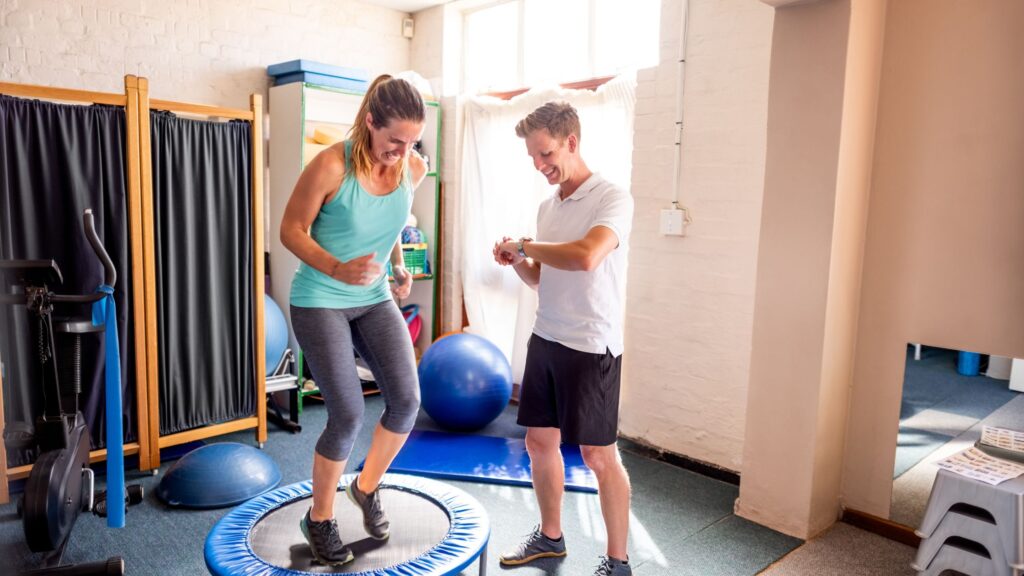
In-home treatment brings professional rehabilitation directly to the patient’s home, supporting comfort, consistency, and real-world application. This approach benefits individuals with limited mobility, transportation challenges, or post-surgical restrictions. In-home physical rehabilitation focuses on:
- Safe movement and transfers within the home: Therapists teach safer ways to get in and out of bed, chairs, and the bathroom without twisting or straining. They also correct body mechanics so patients don’t rely on compensations that increase pain.
- Stair navigation and balance training: Therapy builds step control, pacing, and confident handrail use for safer stairs at home. In addition, balance drills reduce fall risk during turns, uneven surfaces, and quick direction changes.
- Strength and mobility exercises using home-based setups: Therapists use simple home tools—chairs, walls, bands, and stairs—to rebuild strength and restore mobility safely. This also makes it easier for patients to repeat the same routine between sessions for steady progress.
- Daily task training tailored to the patient’s environment: Patients practice real tasks like dressing, cooking, bending, and carrying items using safer movement strategies. Consequently, improvements translate directly into daily life instead of staying limited to clinic exercises.
Additionally, in-home care allows therapists to identify environmental risks and provide practical guidance. Consequently, patients gain confidence performing everyday activities safely in their own space.
How Physical Rehabilitation Programs Are Structured
Effective rehabilitation follows a clear and adaptable structure. Although each plan differs, most programs include several core phases.
I) Initial Evaluation and Goal Planning
Therapists assess pain levels, movement limitations, strength deficits, and functional challenges. Then, they establish realistic goals aligned with the patient’s lifestyle and priorities. This clarity helps guide every stage of treatment. Additionally, they note daily routines and triggers so the plan fits real-world demands from day one.
II) Pain Management and Mobility Restoration
Rehabilitation begins with safe movement strategies that reduce discomfort and improve flexibility. Therapists introduce controlled exercises and manual techniques when appropriate. Consequently, patients regain motion while minimizing flare-ups. Meanwhile, pacing and proper form help calm irritated tissues while restoring confidence in movement.
III) Strength, Stability, and Functional Training
As symptoms improve, therapy shifts toward strengthening muscles that support joints and posture. Functional exercises mimic daily tasks, ensuring that gains translate into real-life movement. Therefore, patients rebuild control for bending, lifting, and reaching without compensations that restart pain.
IV) Progress Monitoring and Adjustment
Therapists track improvements and adjust intensity as recovery advances. Therefore, patients continue progressing without plateauing or overloading healing tissues. In addition, they update home exercises regularly so recovery stays consistent between sessions.
Physical rehabilitation works best when it follows a clear plan: evaluate, restore mobility, rebuild strength, and adjust as you progress. As a result, relief becomes more stable, and everyday movement feels safer and more confident.
Conditions Commonly Treated With Rehabilitation
Many people start physical rehabilitation for different reasons, but the goal stays the same: restore safer movement, reduce limitations, and make daily life easier. Physical rehabilitation in Maryland addresses a wide range of conditions, including:
- Chronic and acute back pain: Therapy improves mobility, strengthens support muscles, and corrects movement habits that keep pain recurring.
- Post-operative orthopedic recovery: Rehabilitation restores motion and strength safely while protecting healing tissues and following surgical precautions.
- Joint stiffness and muscle weakness: Treatment combines targeted mobility work with progressive strengthening to restore smoother, more stable movement.
- Balance disorders and fall risk: Therapists retrain balance reactions and gait control to reduce falls and improve confidence while walking.
- Neurological movement limitations: Therapy focuses on coordination, motor control, and functional practice to improve safer daily movement.
- Age-related mobility decline: Rehabilitation builds strength, flexibility, and endurance to support independence in everyday activities.
Because treatment plans remain individualized, therapy adapts to each patient’s needs rather than following a one-size-fits-all model.
Choosing the Right Rehabilitation Provider in Maryland
Selecting the right rehabilitation provider shapes not only your outcome, but also how supported and confident you feel throughout recovery. Patients typically progress faster when care stays consistent, plans are tailored to their real limitations, and expectations are explained clearly—so there are no surprises and no “one-size-fits-all” sessions.
A strong rehabilitation provider should offer licensed therapists who complete thorough evaluations, build structured treatment plans, and adjust them based on how your body responds week to week. They should also track progress in a transparent way—mobility, strength, balance, pain patterns, and functional milestones—so you can see what’s improving and what needs more focus. In addition, flexible care options matter, including in-home treatment when mobility, transportation, or post-surgical restrictions make travel difficult. Patient education should remain a priority as well, because long-term success depends on learning safe mechanics, pacing strategies, and home exercises that prevent flare-ups after formal sessions end.
Swift Rehabilitation focuses on patient-centered care by emphasizing safety, clear communication, and measurable progress at every stage. Patients receive guidance that fits their daily life, not just clinic routines, so improvements feel practical, steady, and easier to maintain over time.
When to Begin Physical Rehabilitation
Patients should consider rehabilitation when pain interferes with daily life, movement feels unstable, or recovery stalls after surgery or injury. Early intervention often prevents minor issues from becoming long-term limitations.
Key Points to Remember:
- Don’t wait for pain to become “constant.” If discomfort changes how you walk, sit, lift, or sleep, rehabilitation can address the cause before compensation patterns build up.
- Watch for stalled recovery. If progress plateaus for weeks after an injury or procedure, therapy can restore momentum with safer progression and better movement strategy.
- Stability matters as much as pain relief. Frequent slipping, wobbling, or “giving way” signals a balance or strength deficit that rehab can correct.
- Function is the true benchmark. The goal is not only less pain, but better everyday movement—stairs, bending, reaching, carrying, and walking.
Consistency plays a critical role in success. Patients who follow prescribed programs, communicate symptoms, and stay engaged tend to recover more efficiently and maintain results longer.
How Consistency Improves Outcomes:
- Follow the plan between sessions. Home exercises reinforce progress and prevent “resetting” each week.
- Report flare-ups early and clearly. Honest feedback helps therapists adjust intensity before small setbacks become bigger delays.
- Stay active within safe limits. Regular movement supports circulation, mobility, and strength rebuilding without overloading healing tissues.
- Track small wins. Noticing improvements in daily tasks builds confidence and keeps motivation steady through recovery.
When patients stay consistent—doing home exercises, communicating flare-ups, and staying active within safe limits—rehabilitation becomes smoother and more predictable. Over time, those small weekly wins add up to stronger movement, better confidence, and results that actually last beyond the therapy sessions.
Conclusion
Recovery requires more than time—it requires guidance, structure, and the right support system. Physical Rehabilitation offers a comprehensive approach to restoring movement, reducing pain, and rebuilding independence. Swift Rehabilitation delivers personalized care designed around real-life needs, helping patients move forward with confidence and stability. Swift Rehabilitation remains committed to safe, effective, and patient-focused recovery across Maryland. Additionally, each plan progresses step by step, so patients improve safely without feeling rushed or uncertain. As a result, recovery feels more stable, more practical, and easier to maintain long after formal sessions end.

Frequently Asked Questions
1. How does physical rehabilitation help with back pain relief?
It improves spinal and hip mobility, strengthens core support, and corrects posture and movement habits. Additionally, it retrains bending and lifting mechanics so you reduce flare-ups and build lasting relief. You also learn simple daily strategies to protect your back between sessions.
2. Is post-surgery rehabilitation necessary after a successful procedure?
Yes. Surgery fixes the structure, but rehab restores range of motion, strength, and safe movement patterns. Consequently, you recover faster and reduce stiffness or setbacks. A therapist also guides your progression so you do not return to activity too soon.
3. Who benefits most from in-home treatment?
Patients with mobility limits, post-surgery restrictions, or transportation challenges benefit most. Moreover, home visits allow therapy to target real-life tasks like stairs, transfers, and daily movement. This format often improves consistency because care comes to your door.
4. How long does physical rehabilitation usually last?
It depends on your condition and consistency. Many plans last weeks to months, and your therapist adjusts the program based on progress and tolerance. Clear goals and regular re-checks help you stay on track and measure improvement.